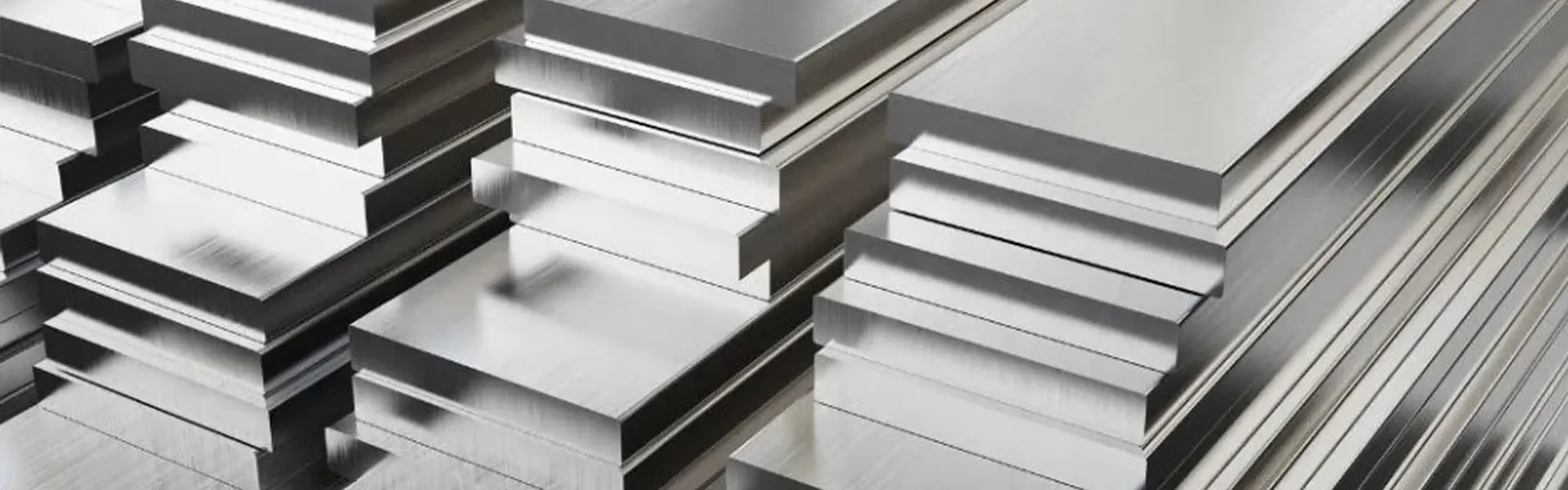
stainless steel coil/plate
stainless steel coil/plate

- ASTM A240 301 Stainless Steel Composition & Work‑Hardening Properties
- ASTM A240 301 (UNS S30100) is a high‑strength austenitic stainless steel grade under ASTM standards. With 16–18% chromium and 6–8% nickel, its lower nickel content compared with 304 provides signif
- Read more »

- 1.4828 Stainless Steel Composition & Heat‑Resistant Properties
- 1.4828 (X15CrNiSi20‑12) is a heat‑resistant austenitic stainless steel grade under EN standards. With 19–21% chromium, 11–13% nickel, and 1.5–2.5% silicon, it provides excellent oxidation resista
- Read more »

- 1.4833 Stainless Steel Composition & Oxidation‑Resistant Properties
- 1.4833 (X12CrNi23‑13) is a high‑temperature oxidation‑resistant austenitic stainless steel grade under EN standards, equivalent to 309. With 22–24% chromium and 12–15% nickel, it offers excellent
- Read more »

- 1.4878 Stainless Steel Composition & Heat‑Resistant Properties
- 1.4878 (X8CrNiTi18‑10) is a heat‑resistant austenitic stainless steel grade under EN standards, equivalent to 321. With 17–19% chromium, 9–12% nickel, and titanium stabilization, it minimizes carb
- Read more »

- 1.4948 Stainless Steel Composition & High‑Temperature Strength
- 1.4948 (X6CrNi18‑11) is a high‑temperature austenitic stainless steel grade under EN standards, equivalent to 321H. With 17–19% chromium, 9–12% nickel, and titanium stabilization, it prevents carb
- Read more »

- 1.4539 Stainless Steel Composition & Super‑Austenitic Corrosion Resistance
- 1.4539 (X1NiCrMoCuN25‑20‑7) is a super‑austenitic stainless steel grade under EN 10028‑7 and EN 10088‑2, equivalent to 904L. With 19–23% chromium, 23–28% nickel, 4–5% molybdenum, and added cop
- Read more »

- 1.4438 Stainless Steel Composition & High‑Nickel Austenitic Properties
- 1.4438 (X2CrNiMo18‑15‑4) is a high‑nickel, high‑molybdenum, low‑carbon austenitic stainless steel grade under EN 10028‑7 and EN 10088‑2. As an advanced version of 316L, it contains 17–19% chro
- Read more »

- 1.4435 Stainless Steel Composition & High‑Purity Corrosion Resistance
- 1.4435 (X2CrNiMo18‑14‑3) is a high‑purity, high‑nickel, low‑carbon austenitic stainless steel grade under EN 10028‑7 and EN 10088‑2. As an enhanced version of 316L, it contains 17–19% chromium
- Read more »

- 1.4571 Stainless Steel Composition & High-Temperature Stability
- 1.4571 (X6CrNiMoTi17-12-2) is a titanium-stabilized austenitic stainless steel grade specified under EN 10028-7 and EN 10088-2, equivalent to 316Ti. Its composition includes 16.5–18.5% chromium, 10.5
- Read more »

- 1.4429 Stainless Steel Composition & High-Corrosion Resistance
- 1.4429 (X2CrNiMoN17-13-3) is a nitrogen- and molybdenum-alloyed austenitic stainless steel grade under EN 10028-7 and EN 10088-2, classified within the 316LN family. With 16.5–18.5% chromium, 12–14%
- Read more »

- 1.4432 Stainless Steel Composition & High-Molybdenum Performance
- 1.4432 (X2CrNiMo17-12-3) is a high-molybdenum, low-carbon austenitic stainless steel grade specified under EN 10028-7 and EN 10088-2. As an enhanced version of 316L, it contains 16.5–18.5% chromium,
- Read more »

- 1.4436 Stainless Steel Composition & Enhanced Pitting Resistance
- 1.4436 (X3CrNiMo17-13-3) is a high-molybdenum austenitic stainless steel grade specified under EN 10028-7 and EN 10088-2. With 16.5–18.5% chromium, 12.5–14.5% nickel, and 2.5–3% molybdenum, it offe
- Read more »